


Last updated: November 19, 2026
Short answer
On December 11, 2026, the federal definition of hemp changes. Total THC, including THCA, counts toward the 0.3% limit, and finished products with more than 0.4 mg of total THC per container fall outside the definition. Cannabinoids the plant can’t produce naturally already changed on November 12. Plan your catalog, checkout and processor conversations now.
For CBD and hemp brands, this season has two big dates two weeks apart: Black Friday on November 27 and the federal change on December 11. Here’s what changes, and a week-by-week plan for the time left. If Square closed your account on November 5, save what you need from Square first, then run this check before you apply anywhere.
What changes, and when?
| Date | What changes | Examples |
|---|---|---|
| Nov 12, 2026 (already in effect) | Cannabinoids the cannabis plant can’t naturally produce fall outside the hemp definition. | THC-O acetate |
| Dec 11, 2026 | Total THC, including THCA, counts toward the 0.3% dry-weight limit. | THCA flower |
| Dec 11, 2026 | Finished products with more than 0.4 mg total THC per container fall outside the definition. | Many full-spectrum tinctures and edibles |
| Dec 11, 2026 | Naturally occurring cannabinoids that are synthesized or made outside the plant fall outside the definition. | Ask counsel. See the note below. |
The changes come from the November 2025 appropriations law (Public Law 119-37). A September 2026 funding law (Public Law 119-103) moved most of them from November 12 to December 11. The Congressional Research Service summary walks through each part of the new definition. Industrial hemp grown for fiber, grain or seed isn’t the target.
Some details are still open. The law told the FDA to publish lists of covered cannabinoids and more guidance on what counts as a “container.” Both were due February 10, 2026, and neither had been published as of November 17, 2026. Published analyses also disagree on whether converted delta-8 and HHC fell outside the definition on November 12 or do so on December 11. Until counsel tells you otherwise, treat them as already affected.
What does it mean for my payments?
- Products outside the new definition aren’t hemp, so they can’t be sold as hemp after the date. Processors’ acceptable use policies generally track federal law, so the products your account is approved for may change.
- COAs need to show total THC, and total THC per container for finished products, not just delta-9.
- Subscriptions that renew after December 11 with an affected product need to change before the renewal runs.
- Orders taken before the date and shipped after it are a question for counsel, not for your checkout settings.
- Clearing affected stock before December 11 puts a volume spike on exactly the products underwriting reads most closely, during Black Friday week.
What should I do before December 11?
Three weeks are left. If you haven’t started, the first week carries the most work.
This week · Nov 19–24
Audit the catalog, decide, then tell your processor
- Confirm nothing you sell relies on cannabinoids the plant can’t produce. Those lost hemp status on November 12.
- Pull a current COA for every SKU, bundles included. Check total THC and total THC per container. See what else underwriting asks for.
- Sort every SKU: clearly fine, clearly affected, unsure. Send the “unsure” list to counsel.
- For each affected SKU, decide: reformulate, sell through before December 11, or remove.
- Email your processor the list and your plan. Ask in writing what happens to affected listings after December 11.
- Find every subscription that includes an affected SKU and plan the switch or cancellation, with notice to customers.
Black Friday week · Nov 25–Dec 1
Sell what you can ship in time
- If you’re discounting affected stock, include it in your volume heads-up to your processor.
- Show a clear ship-by date on affected products, and don’t sell more than you can ship in time.
- Keep tracking for every order. Disputes from this week can arrive into March.
Final stretch · Dec 2–11
Change the store
- Remove or update affected products, bundles and subscription options before December 11.
- Update product pages, emails and ads so nothing promotes an affected product after the date.
- Refund any order you can’t fulfill in time, before the customer has to dispute.
- Send your processor the updated catalog, with COAs for anything reformulated.
What should I ask my processor, in writing?
- Which of my product types are approved on my account after December 11?
- What happens to my account and listings for products the change affects?
- Do you need new COAs, and in what format, for reformulated products?
- Does clearing affected stock before December 11 fit my current volume limit?
- If funds are held, who do I contact and what documents will you ask for?
Where Bankful fits
Bankful is a high-risk payment processor, and our underwriters know CBD and hemp businesses.* We flag what underwriting will look at. If you want a second read on your catalog plan, talk to a payments specialist.
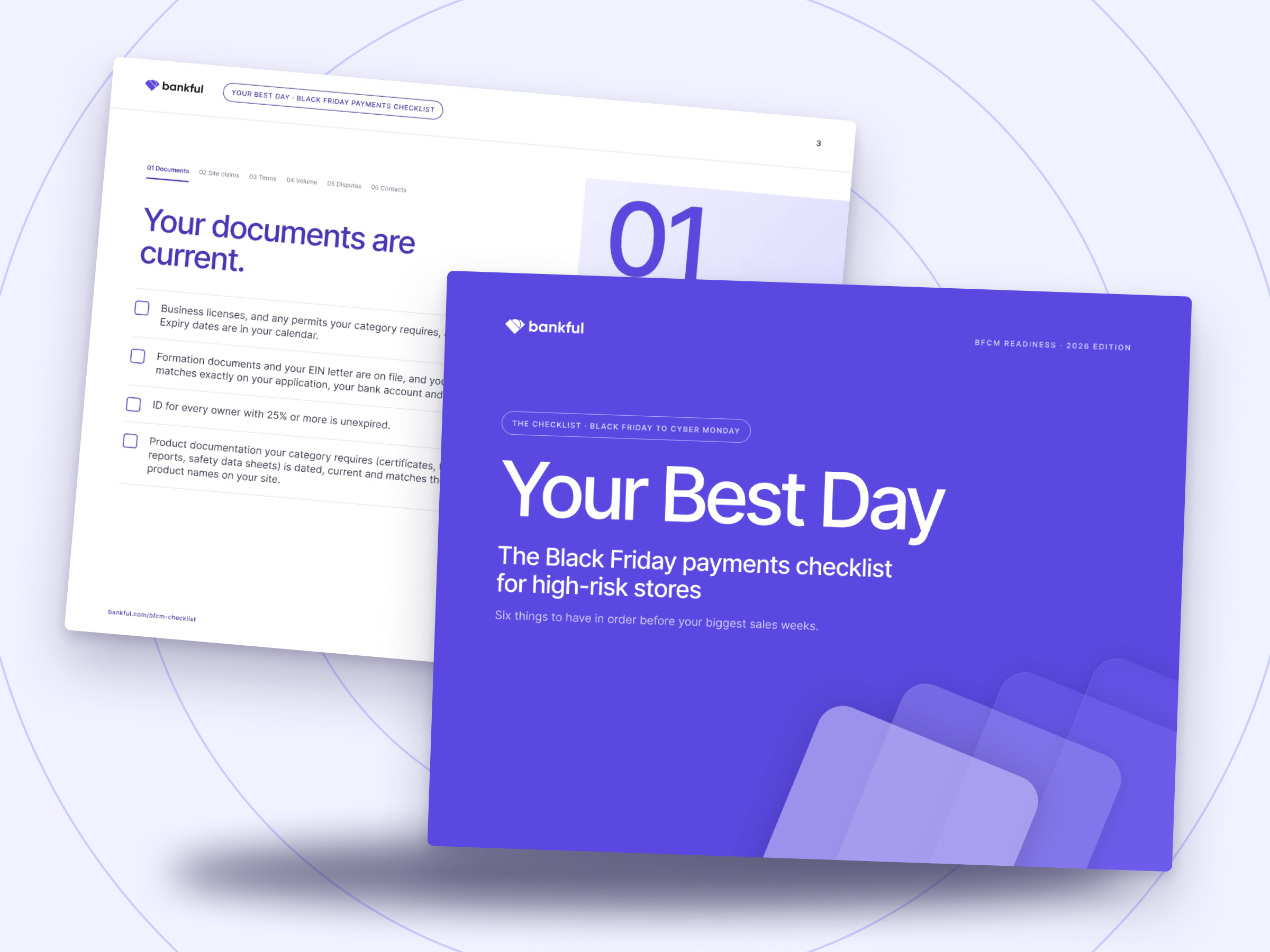
Free checklist (PDF)
Get the Your Best Day checklist
Six checks for your biggest sales day, as a PDF you can work through with your team.
Frequently asked questions
Is THCA still legal after December 11?
Under the new definition, THCA counts toward total THC, so most THCA flower and products no longer meet the hemp definition after December 11. Check with counsel for your specific products.
Is CBD affected by the hemp rule change?
CBD itself isn’t the target, but full-spectrum products with more than 0.4 mg of total THC per container fall outside the definition on December 11. Check each product’s COA for total THC per container.
What changed on November 12?
Products containing cannabinoids the cannabis plant can’t produce naturally, such as THC-O acetate, fell outside the hemp definition on November 12, 2026.
Can I keep selling affected products until December 11?
For most products, the current definition stays in effect until then. Products that changed on November 12 are already outside it. How you handle orders taken before December 11 and shipped after is a question for counsel.
Will the December 11 date be delayed again?
Possibly, but don’t plan on it. Bills to delay the change to 2028, repeal it or replace it with regulation are in committee, and the White House has said the September delay is the last one it will support. Federal funding also runs out on December 11, and the last delay was attached to a funding bill. Plan for December 11 and adjust if the law changes.
What counts as a container?
The law defines it as the innermost packaging in direct contact with the product for retail sale. The FDA was told to publish more guidance and hadn’t as of November 17, 2026.
This article is general guidance, not legal advice. Your processor’s agreement and acceptable use policy, and the laws of the states you sell to, govern your business.
*Bankful is a payment processor and, in some arrangements, provides software and orchestration services under the Bankful Software Agreement. As described in that agreement (§5.11), merchant account services are governed by a separate agreement with the applicable processor of record. Depending on the arrangement, Bankful may be the direct processor of record or may orchestrate routing to a third-party processor. Eligibility to process, including approval, continued processing, holds, freezes, and account termination, is determined at underwriting by the processor of record under its own terms, which vary by provider and may change. Merchants are responsible for understanding and complying with the governing terms of service and acceptable use policy. Merchant onboarding also includes a Hold Harmless agreement under which the merchant acknowledges how responsibility for processing decisions is allocated.